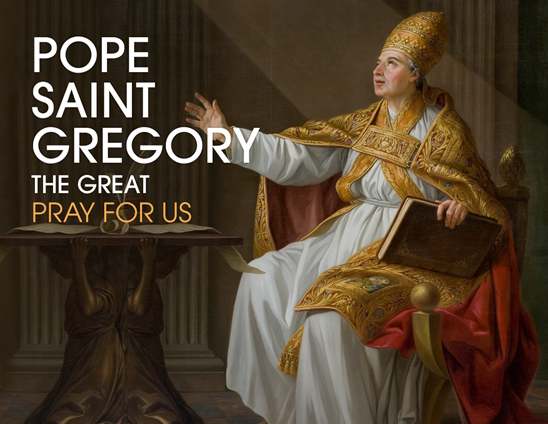
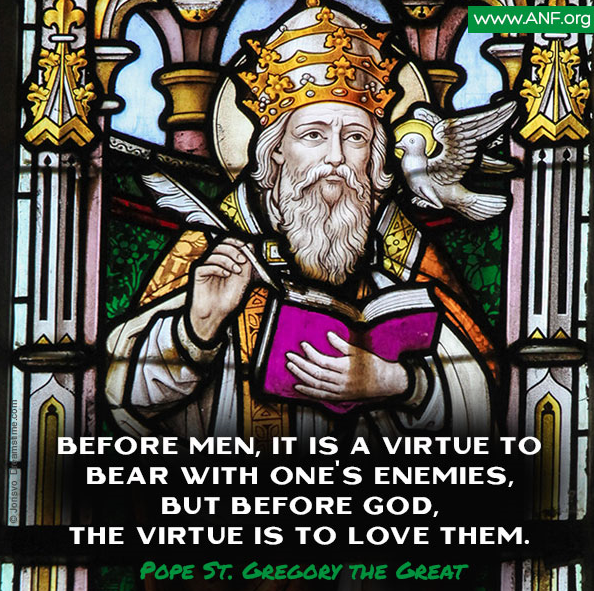
† Quote of the Day "There are in truth three states of the converted: the beginning, the middle, and the perfection. In the beginning they experience the charms of sweetness; in the middle the contests of temptation; and in the end the fullness of perfection." — Pope St. Gregory the Great Today's Meditation "The first level of contrition is a contrition of fear. It's called, "imperfect contrition" or "attrition," because it's motivated by awareness of the ugliness of sin and by fear of eternal damnation. Prompted by the Holy Spirit, it begins a process of inner conversion that disposes us to grace and is completed by sacramental absolution...The second level of contrition, called "perfect contrition," [is] motivated not by a self-oriented fear, but by love for God and the awareness of how good He is. This is much more personal, leading to a deeper relationship with God and a growing desire to avoid anything that might offend Him." – Vinny Flynn, p.118-119 An excerpt from 7 Secrets of Confession Daily Verse "For those he foreknew he also predestined to be conformed to the image of his Son, so that he might be the firstborn among many brothers. And those he predestined he also called; and those he called he also justified; and those he justified he also glorified. What then shall we say to this? If God is for us, who can be against us?" — Romans 8:29-31 | St Gregory The Great Pope St. Gregory the Great (540-604 A.D.) was the son of a wealthy Roman senator. His mother and two of his aunts are also saints, which provided him with a strong and devout religious upbringing. His skill in grammar and rhetoric were exceptional, and he followed in his father's political footsteps by serving in public office as the prefect of Rome. Discerning a call to the religious life, he sold all of his possessions and converted his home into a Benedictine monastery. He used his liquidated assets to build six other monasteries. Because of his talent and intelligence he was unanimously chosen to become the Roman Pontiff, the first monk to become Pope. During his lifetime Rome was sacked by invading barbarian hordes, and the city also suffered severe damage from floods and pestilence, causing his pontificate to be an important one. He brought stability and order to the Church in a time of great societal and cultural upheaval. His profound influence on the doctrine, organization, and discipline of the Church cannot be underestimated, thus earning him the title "The Great" which he shares with only two other popes. For his abundant doctrinal and spiritual writings he is also considered to be one of the four great Doctors of the Latin Church. He is most commonly known for promoting and standardizing the sacred music of liturgical worship, now called "Gregorian Chant." Pope St. Gregory the Great is the patron of popes, masons, choir boys, singers, teachers, and musicians. His feast day is September 3rd. | Memorial of Saint Gregory the Great, Pope and Doctor of the Church • Readings for the Memorial of Saint Gregory the Great, Pope and Doctor of the Church Reading 1 Colossians 1:1-8 Paul, an Apostle of Christ Jesus by the will of God,
and Timothy our brother,
to the holy ones and faithful brothers and sisters in Christ in Colossae:
grace to you and peace from God our Father. We always give thanks to God, the Father of our Lord Jesus Christ,
when we pray for you,
for we have heard of your faith in Christ Jesus
and the love that you have for all the holy ones
because of the hope reserved for you in heaven.
Of this you have already heard
through the word of truth, the Gospel, that has come to you.
Just as in the whole world it is bearing fruit and growing,
so also among you,
from the day you heard it and came to know the grace of God in truth,
as you learned it from Epaphras our beloved fellow slave,
who is a trustworthy minister of Christ on your behalf
and who also told us of your love in the Spirit. Responsorial Psalm Psalm 52:10, 11 R. (10) I trust in the mercy of God for ever.
I, like a green olive tree
in the house of God,
Trust in the mercy of God
forever and ever. R. I trust in the mercy of God for ever.
I will thank you always for what you have done,
and proclaim the goodness of your name
before your faithful ones. R. I trust in the mercy of God for ever.
Alleluia Luke 4:18 R. Alleluia, alleluia. The Lord sent me to bring glad tidings to the poor
and to proclaim liberty to captives.
R. Alleluia, alleluia. Gospel Luke 4:38-44 After Jesus left the synagogue, he entered the house of Simon.
Simon's mother-in-law was afflicted with a severe fever,
and they interceded with him about her.
He stood over her, rebuked the fever, and it left her.
She got up immediately and waited on them. At sunset, all who had people sick with various diseases brought them to him.
He laid his hands on each of them and cured them.
And demons also came out from many, shouting, "You are the Son of God."
But he rebuked them and did not allow them to speak
because they knew that he was the Christ. At daybreak, Jesus left and went to a deserted place.
The crowds went looking for him, and when they came to him,
they tried to prevent him from leaving them.
But he said to them, "To the other towns also
I must proclaim the good news of the Kingdom of God,
because for this purpose I have been sent."
And he was preaching in the synagogues of Judea.
| Praise to You Oh Lord Jesus Christ! | Daily Meditation: Colossians 1:1-8 To the . . . faithful brothers and sisters in Christ in Colossae. (Colossians 1:2) Who were these "faithful brothers and sisters" whom Paul was addressing (Colossians 1:2)? And why was Paul, who had never visited them, writing this letter? We learn from today's first reading that another disciple, Epaphras, had established the Colossian community (Colossians 1:7). Paul and Timothy had heard from Epaphras of their "faith in Christ Jesus and the love that you have for all the holy ones" (1:4). So Paul wrote this letter to affirm these believers in their faith. There were also issues that he needed to address. Some of the believers there were straying from the gospel by requiring strict practices regarding food and drink. Some were also worshiping angels and circulating false teachings about visions (Colossians 2:16-18). It's possible, then, that Epaphras had sought Paul's help in urging these new believers to continue to "walk in" the way of the Lord (2:6). As you read this letter over the next few days, take notice of Paul's pastoral gifts. He doesn't spend a lot of time refuting the errors, or "shadows," that were tripping up the Colossians; instead, he points them to the "reality [that] belongs to Christ" (Colossians 2:17). He reminds them of the salvation Jesus had won for them through his death on the cross, and he encourages them to persevere in faith and to live "in a manner worthy of the Lord" (1:10). As it was for the Colossians, it's easy for us to get blown off track by confusing teachings that don't reflect the fullness of the gospel. These ideas can lead us away from our faith and our love for the Lord. We may even know friends or family members who have been taken in by such beliefs. But Paul shows us that the best way to counter these views is simply to bear witness to Jesus and the beauty of his salvation. That's what Paul did, and his words can help us do the same. So let the beautiful passages in this letter settle deeply in your heart. Fix your attention on Jesus and the "hope reserved for you in heaven" (Colossians 1:5). This will deepen your understanding and help you share the glorious "reality" of Christ with the people around you. "Jesus, let the truths of what you have done for me fill my heart and overflow to others!" Psalm 52:10-11
Luke 4:38-44 | Reflections with Brother Adrian: |  Hear AI Read it for u | From today's Holy Gospel: "....After Jesus left the synagogue, he entered the house of Simon.
Simon's mother-in-law was afflicted with a severe fever,
and they interceded with him about her.
He stood over her, rebuked the fever, and it left her.
She got up immediately and waited on them....." Word of the Lord. | From Bishop Barron: "In the eighteenth, nineteenth, and twentieth centuries, in an attempt to make Jesus more palatable to rationalists and "realists," theologians put great stress on Jesus's preaching, especially his ethical teaching. But this is not the Jesus that Luke presents. Rather, he is a healer—soter, rendered in Latin as salvator, which just means "the bearer of the salus" or health. Jesus is portrayed as a healer, a savior. In him, divinity and humanity have come together; in him, the divine life and divine power are breaking through. God's deepest intentions for his beloved creatures appear—what God plans for us in the kingdom to come is now historically anticipated." end quote.
The very end of the Gospel, after saying He needed to go on preaching, and He healed everyone that came to Him, it said, "I must proclaim the good news of the Kingdom of God,
because for this purpose I have been sent."
And he was preaching in the synagogues of Judea." As Christ followers, we must do the same. Preach on. He desires to continue His mission, in us baptized souls.
And it just so happens, that along the way, there are healing events. Healing of souls. Healing of bodies. And this helps us along the pilgrimage that we are traveling through the earth. The Gospel shows us our Master, the one we are to emulate and to be, healing at sunset, and rising before daybreak, and taking time to pray off alone.
We are to be doing the same. Sunset is still the time for praying. Daybreak is the time to be already on the journey. All for the Lord. All for the Kingdom.
And you? Are you praying at sunset and at daybreak? All for the Lord, all for the Kingdom of God?
Who said you don't have time for it? It is said, that we can be our own greatest obstacle then, right? We make time for what is important. What about Your Father in Heaven?
We make time to be with the ones we love, what about our Father in Heaven?
Where is your heart?
Our Lord Jesus wants the heart of us all for the Lord our Father in Heaven.
Is that too much to ask ... of each one of us? |  audio | Random Bible Verse 1
Matthew 23:12 "Whoever exalts himself will be humbled, and whoever humbles himself will be exalted."
Word of the Lord! | If one day you don't receive these, just visit Going4th.com
God Bless You! Peace | | |